Sunday, September 22, 2013

On housekeeping


"Modern housekeeping, despite its bad press, is among the most thoroughly pleasant, significant,and least alienated forms of work that many of us will encounter even if we are blessed with work outside the home that we like... Seen from the outside, housework can look like a Sisyphean task that gives you no sense of reward or completion. Yet housekeeping actually offers more opportunities for savoring achievement than almost any other work I can think of. Each of its regular routines brings satisfaction when completed. These routines echo the rhythm of life, and the housekeeping rhythm is the rhythm of the body. You get satisfaction not only from the sense of order, cleanliness, freshness, peace and plenty restored, but from the knowledge that you yourself and those you care about are going to enjoy these benefits."
-Cheryl Mendelson, Home Comforts: The Art and Science of Keeping House (affiliate link)

This book is inspiring me to turn over a new leaf this season. I wish someone had given it to me when I got married, or left the nest, but I am happy to come across it now. I think I'll go clean out the refrigerator now.

Saturday, September 21, 2013

Magic Mushroom Immunity Soup (vegan, gluten-free)

I don't even like mushrooms. Well, I didn't until I learned about the amazing medicinal properties of mushrooms. They fight cancer! They are antibiotic, antiviral, antifungal, and they lower cholesterol. Anyone who has used them recreationally knows that mushrooms have powerful bioactive effects, but those are not limited to the psychedelic ones. Paul Stamets, a mushroom expert, calls them a "functional food." I love that term. The Huffington Post ran an interesting article about the properties of different medicinal mushrooms. Mushrooms as medicine is well documented since ancient times.


This is not a beautiful soup, nor is it quick. But it is robust, nutritious, medicinal, and delicious. It doesn't take long to cook, but there is quite a lot of chopping involved. You could throw it all in the food processor to save time, but I find the chopping meditative. Especially on a rainy day like today. I started making this immunity soup last winter, and I have noticed many fewer colds, sniffles, flus, scratchy throats, and cold sores blowing through our household. Now, I crave it a couple of times a month.

Even if you don't like mushrooms either, don't be afraid to give this soup a try. It's medicine! I find if I chop the mushrooms finely enough, the texture doesn't bother me, and the flavor is pleasant. You can always add plenty of ginger, garlic, jalapeno, and miso to cover the mushroom flavor if you like. 


Magic Mushroom Immunity Soup
makes 4-6 servings 

2 tablespoons coconut oil
1 small onion
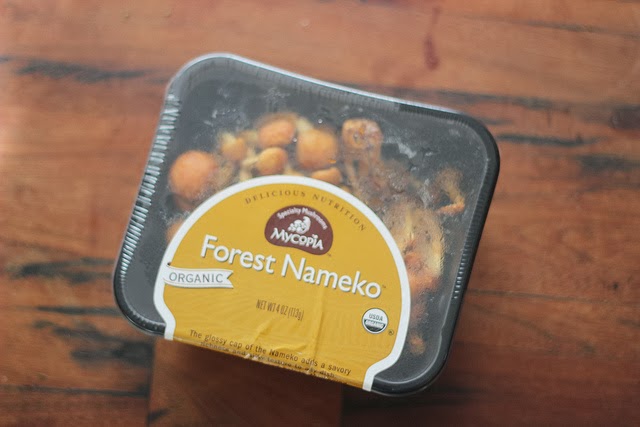
8 ounces medicinal mushrooms (I like shitakes and forest nameko)
a knob of fresh ginger, grated (at least 2-3 tablespoons)
1-2 (or more) hot peppers, minced, plus more for garnish if desired
4 (or more) garlic cloves, minced
1 daikon radish, sliced thin
1 bunch kale, or sea vegetables, or other hearty green
2 cups veggie broth, preferably homemade
fresh (unpasteurized) miso paste
fresh herbs
fresh lemon juice
rice noodles or steamed rice

Heat the coconut oil in a soup pot. Put a separate kettle of water on to boil. To the coconut oil, add the onion and allow to soften while you chop the mushrooms. Remove the woody stems from the mushrooms and put the stems in a mug or Pyrex measuring cup (affiliate link); cover with 2 cups hot water and allow to steep. (This is your mushroom "broth" and separate from the veggie broth. You will add both later.)

Add the chopped mushrooms to the onions and saute gently while you chop and add the ginger, garlic, hot peppers, and daikon radish. 

When everything has softened, after 10-15 minutes or so, strain the mushroom stems from the broth and add the liquid to the pot, along with 2 cups of veggie broth and 2 cups of water. Add the kale. Bring to a simmer and cook until the greens are tender, 20 minutes.

(During this time, make the steamed rice or cook the rice noodles to the package directions in a separate pot.)

When you are ready to serve, place 1 tablespoon miso paste into the bottom of each bowl. Ladle the soup over top, stir to combine. Then add the steamed rice or rice noodles. Top with a squeeze of lemon juice, fresh herbs, sliced hot peppers, and hot sauce.


I wish you good health!

Thursday, September 19, 2013

Perfect Pork Chops with Quick Skillet Applesauce


Start with the highest-quality, bone-in, rib chop you can find. Organic, pasture-raised pork is best. You want thick chops, about an inch and a half. This is not a quick recipe, but it isn't difficult, so plan ahead. It's a nice thing to make on a chilly fall day when you want to spend time in the kitchen. My pork chops are a three step process: Brine, bake, sear, eat.

Okay, four steps.


These pork chops are worth all the trouble, though. This method tenderizes the meat, cooks it gently, then the last sear in a hot pan gives it a fragrant, crispy, bacony crust. This method works well for thick steaks, too. Check out The Science of Good Cooking (affiliate link) for details on why it works. 

Plan to allow the chops to brine for at least 1 hour, but not more than four hours or they will get soggy. I mix up the brine in a large liquid measuring cup. 


 For the brine:

1 cup hot water
2 tablespoons kosher salt
1/4 cup coconut sugar (or brown sugar)
1/4 cup apple cider vinegar
1 tablespoon peppercorns, crushed
1 teaspoon mustard seeds, crushed
a  few whole allspice berries, crushed
1 tablespoon dijon mustard
a handful of fresh herbs from the garden: rosemary, thyme and sage are good

Add the hot water, salt, sugar, and vinegar to a large measuring cup and stir well until the solids are dissolved. Lightly crush the spices in a mortar and pestle or with a rolling pin. Add the remaining ingredients to the brine. Make two 1 inch slits in the fatty edge of each pork chop with a sharp knife: this will help them lie flat as they cook. Nestle in the pork chops (add a bit more water or broth if needed to mostly cover the meat) and place in the refrigerator to brine for 1-4 hours. 


To bake the pork chops:

Remove the pork chops from the brine. Pat them dry and allow to warm on the counter for about 45 minutes. Preheat the oven to 275F. Place a wire rack in a rimmed baking sheet. Put the pork chops on the wire rack, and bake until the internal temperature of the meat reaches 120-125F, 30-40 minutes. Pay close attention toward the end of cooking time; overcooked pork is tough and tasteless.


While the pork is baking, start the applesauce:

 2 tablespoons coconut oil
1/2 red onion, chopped fine
2 small apples, chopped
1 pear, chopped
pinch chili powder
pinch ground cinnamon
2 tablespoons jam (homemade nectarine habanero is great here)
1 cup chicken stock
salt and pepper to taste

In a saute pan over medium heat, warm the coconut oil. Add the onion, apple, and pear and allow to soften, stirring frequently, 10-15 minutes. Add salt, pepper, chili powder, and cinnamon and toast until fragrant, about 1 minute. Add the jam and chicken stock and stir to combine. Simmer over low heat until the fruit is broken down and thickened, and the pork chops are nearly ready. Puree with a food processor or immersion blender.


Pan-Fry the Pork Chops 

Remove the pork chops from the oven. Heat a heavy-bottom pan over high heat until screaming hot. Add 1 tablespoon coconut oil. When smoking, place in the pork chops. Let sizzle until golden brown and crusty, about 2 minutes per side. Brown the fatty edge by holding the pork chops upright with tongs. Allow the pork chops to reach an internal temperature of 145F, then remove to a plate and let rest for 10 minutes before serving.

Top with the skillet applesauce. Serve with mashed potatoes, something green, and a glass of wine.


With inspiration from:
Cook's Illustrated
Nopa, my favorite restaurant in San Francisco, and my favorite pork chop
and Married with Dinner


Wild Fermentation

"Your body is an ecosystem that can function most effectively when populated by diverse species of microorganisms. Sure, you can buy 'probiotic' nutritional supplements containing specific selected bacteria that promote healthy digestion. But by fermenting foods and drinks with wild microorganisms present in your home environment, you become interconnected with the life forces of the world around you... Wild fermentation is a way of incorporating the wild into your body, becoming one with the natural world. Wild foods, microbial cultures included, possess a great, unmediated life force, which can help us adapt to shifting conditions and lower our susceptibility to disease. These microorganisms are everywhere, and the techniques for fermenting them are simple and flexible."

Sandor Ellix Katz, Wild Fermentation (affiliate link)

Tuesday, September 17, 2013

On being the mother of a late walker


My babe is 17 months old and still not walking. We have some anxiety about this. Okay, a lot of anxiety. Sure, he's still in "the window," but what happens next month if he hasn't decided to walk? How much do we encourage him to stand and walk? Should we push him more? Some birds need a little shove out of the nest. He can walk, we think, he just doesn't know it yet. He is strong and active. He walks around the furniture, and he pushes his train or my birth ball around the yard. He's a quick crawler. Give him 2 seconds and he's across the room, opening the baby gate and climbing the stairs, or crawling down the driveway toward the street.

We love our big baby. We love that we've had this extended period of not-walking, not-chasing. Of babyhood. He'll do it when he's ready. He had a rough start as a young baby: months and months in the PICU with breathing problems. Maybe he needs to be a baby longer because he missed out on so much during those months in the hospital. That's fine. 

And yet. We wish he'd walk, on time, like the other children. Is he wounded from his hospitalization? Did the drugs stunt his development? Is this a harbinger of difficult times to come? It's hard to not wonder.

Every day, for months now, we wonder if today's the day that he'll take off running. Each day is not the day.

When you're a parent, struggling through the day-to-day mucky-muck of parenting, every little thing seems like a big hairy deal. Probably, in another few months, we won't even remember this anxiety, as the three of us transition into toddlerhood.

Sometimes, in those faint fleeting floating dreams as you're falling asleep, I dream he's choking and I wake with a gasp. Anxiety is a puma that lives in our house. Does every mother experience this?

We strive for a peaceful life. So, instead of worrying, we are working harder at play. I want him to use his whole body, I want him to find the pleasure in movement. We dance. We do yoga (affiliate link) (he thinks Mama's downward dog is hilarious). We pretend we're elephants or monkeys. We climb on top of and into the laundry basket. We make forts. We chase the cats. We chase each other. We are having so much fun!

Really, mostly, we're okay with our big boy who prefers crawling. There are important lessons in parenting here.

Be patient. Everything changes.
Be kind. Kindness toward himself and others might be the most important lesson I want him to learn.
Relax and find the humor. It is present in everything and so much easier to find if you cultivate a light heart.
He'll do it when he's ready. Relax and yield to the power that's larger than you.
He is the teacher. Look for the lesson.
Childhood is fleeting. It's not a race. We're on a long lazy float down the river, and we're here to enjoy it.
Just because he's not walking now doesn't mean he won't get into college.
Show him what is possible. He may not know what he can do. 
He is perfect in every way. Treasure his tiny, strong body.
Do not compare your treasure to your neighbor's.
Play more. 

Monday, September 16, 2013

Heavenly Labneh

After reading about labneh, the Middle Eastern yogurt cheese, in so many different places lately, it was past time to make it myself. It's so easy: stir some salt into a quart of Greek yogurt, pour into cheesecloth to drain, and wait a few hours or overnight until it's the consistency you like. David Lebovitz and Heidi at 101 Cookbooks both have nice photos of this process.


I love goat cheese, and cream cheese, but now I prefer labneh. It's milder, but still tangy. The texture is smooth. It's my favorite thing to eat for breakfast these days, or a quick lunch. We love it on toasted walnut bread with slow roasted tomatoes or with radishes and an egg. 


It's especially good on toast with homemade jam. I canned some late-season apricot and peach butters this weekend because I know how good they will taste, in the dark cold winter, on toast with labneh, and a hot cup of coffee or tea.

Sunday, September 15, 2013

Honey Vanilla Roasted Apricot Butter

Apricots again. You know I love apricots. Rosy little blenheims, pixie-cot, and autumn royal. I love them fresh, but they really shine when cooked, soft and slumped, lightly sweetened and spiced. I love how roasting brings out the flavor of fruits and vegetables. The slow heat of the oven coaxes out the true flavor, even at the end of the season, even when the fruit is a little too firm, yielding a self-actualized fruit, the Platonic Ideal, of, in this case, apricots.


When I saw the technique for this oven roasted apricot butter, I had to try it. I knew it would make delicious apricot preserves, even with less-than-perfect, last-of-the-season fruit. The apricots linger with the honey overnight, then you slip them in the oven where the real love happens. Halfway through cooking time, I found the honey aroma a bit off-putting, and I nearly scrapped the whole batch. Don't be alarmed if you find that this is the case for you. It is worth it in the end and now I am rewarded with 5 more cups of delicious, tart, sweet, honey and vanilla infused apricot butter.


Honey Vanilla Roasted Apricot Butter
makes 5 cups
 
3.5 lbs apricots
1 1/4 cups honey
3 vanilla beans
2 tablespoons lemon juice

Halve and pit the apricots. Mix with the honey and one vanilla bean (split lengthwise) in an oven-proof pot or baking dish and allow to macerate in the refrigerator overnight.

In the morning, prepare the water bath. Sterilize the jars and lids. Heat the oven to 350F and slip the apricot mixture into the oven. Roast for about 2 hours, stirring occasionally, until the apricots are reduced to a flavorsome, golden, buttery mush.

Remove from the oven. Add the lemon juice, remove the vanilla bean, and puree the apricots in a food processor or with an immersion blender.

Halve the vanilla beans and split them lengthwise. Into each jar, put half a vanilla bean, then add the hot apricot puree. Remove air bubbles and seal. Process in a hot water bath for 10 minutes.


Honey Vanilla Roasted Apricot Butter on Punk Domestics
PAID ENDORSEMENT DISCLOSURE: In order for me to support my blogging activities, I may receive monetary compensation or other types of remuneration for my endorsement, recommendation, testimonial and/or link to any products or services from this blog.